

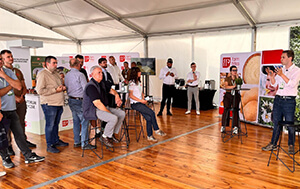
This was the question addressed by participants at a meeting organised by Farm Frites Poland, a member of our Association, during the 4th National Potato Trade Fair. The discussion focused on practical solutions to help growers build soil health, improve farm efficiency, and adapt production to the challenges posed by climate change.
Regenerative agriculture, the use of soil data, and satellite crop monitoring are among the key directions in the development of modern agricultural production. Regenerative agriculture responds to the challenges of protecting soil, using natural resources efficiently, and maintaining high farm productivity over the long term. An increasing number of farmers recognise that measures designed to improve soil health can also support production stability and strengthen farm resilience in the face of changing weather conditions.


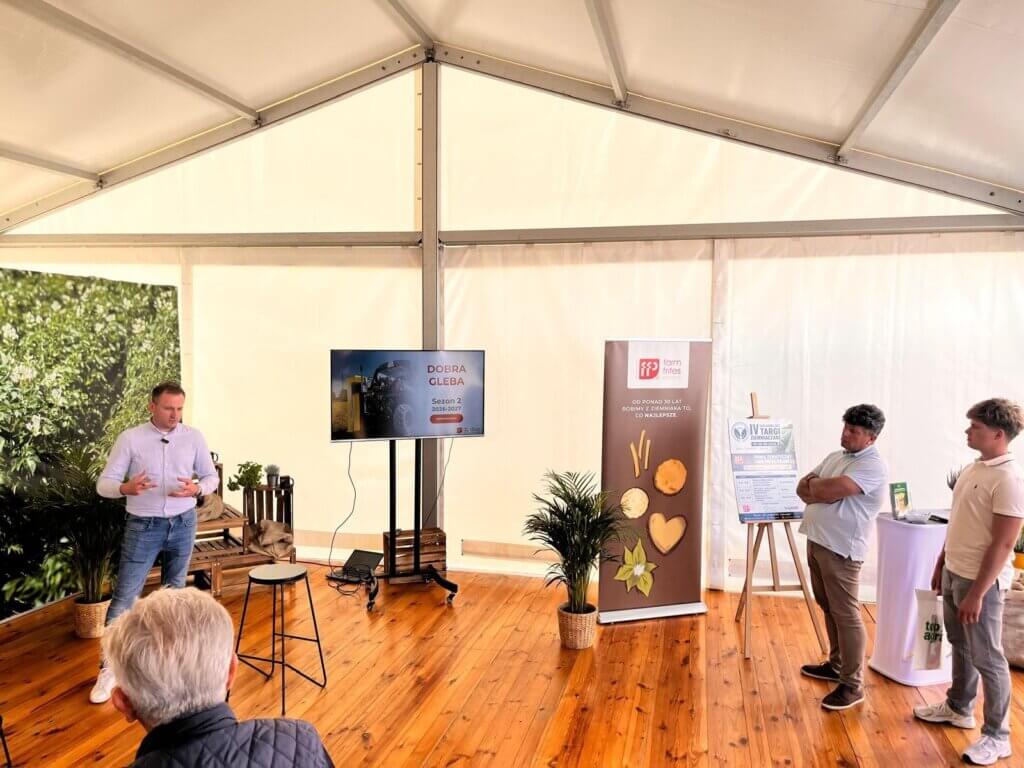

During the meeting, participants learned about the principles of the “Regenerative Agriculture with Farm Frites Poland” programme, which has been implemented since 2025 in cooperation with potato growers. The programme aims to raise awareness of regenerative practices and support farmers in implementing solutions that improve soil health, reduce the environmental impact of production, and strengthen farm resilience.
As Jarosław Wańkowicz of Farm Frites Poland emphasised, the successful implementation of regenerative agriculture requires the involvement of multiple partners and the combination of knowledge and practical experience:
We are building regenerative agriculture together. The programme is supported by specialists from Farm Frites Poland’s Raw Material Department and by our potato suppliers, who implement good regenerative practices on their farms every day. Partners such as Wasat and Agrotechnology also play an important role. Thanks to this cooperation, farmers receive not only theory, which is already widely available, but above all, specific solutions that can be applied on their own farms. It is precisely the combination of growers’ experience, agronomic knowledge, and modern technologies that makes it possible to develop regenerative agriculture effectively in practice.
– emphasised Jarosław Wańkowicz.
Where to Start?
One starting point is the “Dobra Gleba” programme run by Agrotechnology, which highlights the importance of regular soil testing as the basis for effective farm management. Systematic analysis of soil parameters enables farmers to make more informed agronomic decisions and plan the long-term development of their farms more effectively. Participants learned how to interpret soil test results and how soil data can be used when planning fertilisation and measures to support soil fertility.
Soil health plays a key role in water retention, nutrient use efficiency, and yield stability under changing environmental conditions. These functions are essential for maintaining productive and resilient farms over the long term.
Satellite Data for Daily Decisions
During the meeting, representatives of Wasat also discussed the use of satellite technologies in crop monitoring. They presented solutions used to observe crop conditions and monitor changes taking place in fields throughout the season. They also discussed how to interpret satellite reports and the importance of indicators used to assess plant condition.
Satellite technologies are becoming increasingly accessible and can provide valuable support for growers looking for practical tools to inform data-driven decisions.
Partnerships for Regenerative Agriculture
The development of regenerative agriculture requires not only new technologies, but also the exchange of experience and practical cooperation among all participants in the value chain. Combining knowledge about soil, farmers’ experience, and data-based tools makes it possible to develop solutions that can be effectively applied in everyday agricultural practice.
An increasing number of examples show that regenerative agriculture is no longer merely a direction for future development. For many farms, it is becoming part of their daily operations, supporting both production efficiency and the long-term care of every farmer’s most important resource: the soil.